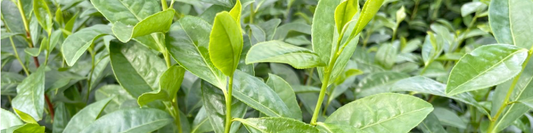
Interview with My Japanese Green Tea, Ricardo Caicedo
Share
Ryan (00:00)
All right. Hello and welcome to the Specialty Matcha Podcast. My name is Ryan. This is my co -host Zongjun who also goes by Sam.
Zongjun (Sam) Li (00:07)
Hello, hello.
Ryan (00:09)
and we're the co -founders of Sanko Matcha Products.
Zongjun (Sam) Li (00:12)
Yeah, we launched this podcast to discuss our learning journey, in matcha sure startup stories and interview experts. And today we are happy to have Ricardo from my Japanese Green Tea.
Ryan (00:22)
So welcome, Ricardo. Thanks for coming on.
Ricardo (00:25)
Thank you for inviting me. I'm very happy to be in your podcast.
Ryan (00:29)
So Ricardo runs one of the most prolific Japanese tea blogs called My Japanese Green Tea. And in the early days when we were founding the companies and doing a lot of research, I kept finding myself on your website over and over, like with every Google search I did, somehow it linked back to My Japanese Green Tea. Whether or not it was talking about a cultivar or types of equipment or Japanese farming techniques.
The depth and breadth of information on your blog is quite amazing.
Ricardo (01:02)
Thank you. It's been for many years, so maybe that's why it's so prolific, but other than that, it is just like a hobby for me. So it's not really, I don't know, like a professional website or anything like that.
Ryan (01:20)
So how did you start it? How did you choose to start the website and the blog and the podcast? And what's your mission behind that platform?
Ricardo (01:30)
So first became interested in Japanese culture, especially the food. And I also started learning the language when I was young, like while I was at school. And after graduating from college, I spent one year in Japan. By that time I could already speak it, but I wanted to further my Japanese.
Ryan (01:36)
Okay.
Ricardo (01:57)
like writing and reading. So while I was there, that was when I first came into contact with real green tea, not the tea bag that I was used to having at home. I'm from Colombia, by the way, South America. And then I started learning about it. And for some reason I decided to start a blog.
And by that time, the goal wasn't to have this huge following or anything. It was just like a sort of diary, like keeping notes, like as I was learning about tea. And that's how it started.
Ryan (02:38)
Okay.
Very cool. And like what's the primary mission? Cause you do everything from like cultivar list, tea reviews, to interviewing other people involved in the industry. What's the overlapping theme, I guess, or mission behind the platform.
Ricardo (03:00)
The main goal is just to get more people interested in Japanese tea. When I started out, maybe it has changed now, but when I started, most of the people were talking about Chinese teas, teas from Taiwan, and they were not specialized. I was one of the few that just concentrated on Japanese tea.
Ryan (03:27)
Got it. So over the years, you've interviewed a lot of different tea people and I've really enjoyed listening to them on your podcast. What are some of the biggest surprises that you've learned over the years from interviewing so many people who are involved in the matcha world or the broader Japanese tea community?
Ricardo (03:47)
Well, I've always felt that people have a lot of passion for tea. And you know, like when you look at the market as a whole, maybe it's very small, like specialty tea is not as huge as, I don't know, coffee or tea blends and herbal teas. But there is like a...
It's not a huge following of tea lovers that are really into it, but the ones that are, they're very passionate and they try to learn a lot. Like this is how I would explain it. For example, everyone loves beer, right? A lot of people drink beer, but only a minority of people are going to really read about beer and how to prepare it and you know, and all these details. That's the kind of people that
that are into tea. And I'm one of them and it's been really fun to meet fellow tea lovers.
Zongjun (Sam) Li (04:51)
Ricardo, over the years, how have you been seeing the readership of Japanese screen tea or matcha increase? Do you see a very sharp trajectory in the past few years, or was it more of a linear growth year by year?
Ricardo (05:10)
The beginning, like just referring to the traffic to my website.
it has changed, but in my experience, it's not going as high rate as before. So every month it probably increases. But I think that the boom started because of the matcha boom. So there was a time when a lot of people at the same time started drinking matcha.
And of course, not all of them were tea lovers, but maybe, you know, they just want the health benefits or for diet, for fitness. And that's what made at least matcha, Japanese tea, a little more popular. And after that, it keeps growing, but it doesn't do at the same rate. So it is not a steep curve anymore.
Ryan (06:07)
Got it. Well, it seems like too, that there's a lot of places to learn about like matcha, green tea in general, as the explosion of vendors. Like we see this whole new generation of like matcha companies doing different educational content on like cultivars or traditional methods or more innovative methods. So based on like all of the new players that we have in the English speaking
matcha community, Japanese community, like what are some things that really excite you or really make you worried about all of this hype and all of these new players that have come in to do some very innovative things in a very traditional industry?
Ricardo (06:54)
I'm happy about what has happened because before it was very hard to find a good quality tea and good quality matcha. And sometimes like you would have to order it from Japan and it was a hassle and there was the language barrier, you know, the shipping wasn't as easy as it was now. But now you can find
very good teas in a website in your own language. You can find more information online. You can see the pictures in social media and everything before that. Tea was a very niche thing that you would actually have to have some Asian background or live in that country to really understand it.
Ryan (07:50)
I have a similar memory, maybe 10 years ago, I was really interested in learning about Chinese pu 'er tea, in particular the wet fermentation pu 'er tea. And I remember looking online for hours trying to find a photo of what they call wo dui where they put it in a very large pile. And after a lot of searching, I could find like two photos. And now you can randomly find that on someone's Instagram feed of...
that processing step in the tea production. It's really crazy how the internet has changed the information that people have access to, in particular for these niche topics in tea.
Ricardo (08:31)
The social media has helped a lot because before that there was a lot of just text which is what I mostly do so it was hard to find videos about tea hard to find like good pictures even blog posts would have like very basic pictures and that would be it but now it's it's much different
Zongjun (Sam) Li (08:57)
Ricardo, can you maybe share a little bit about the Nihoncha Instructor Association that you end up getting the qualification from? I found it very interesting that you are, as the first Colombian, that received such qualification, which was quite amazing. How did you end up knowing this association, making contact with them, and end up pursuing this route?
Ricardo (09:22)
Well, I was writing the tea blog. I got into contact with obviously many Japanese people and someone told me about the Nihoncha Instructor Association. In Japanese it's called Nihoncha Instructor Kyokai. And they, if I'm not mistaken,
it's a nonprofit organization. They were founded was because just to keep the culture alive and because it's been teen in Japan kind of stagnated a little because people started drinking just bottle tea, you know, or or coffee. And of course they drank.
They drank tea every day, but there were not that many people that would take a Kyusu and the traditional Japanese tea pot or whisk their matcha and talk about cultivars and all that. So that's one of the main reasons to promote Japanese tea culture, but they would do it only for Japan.
It's been, I think they're very traditional still because I did that a long time ago, many years ago. And at that time it was only available in Japanese and it would be written. It wouldn't even be on a computer. I would have to write the exam by hand and send it through mail.
Zongjun (Sam) Li (11:02)
⁓
wow, very, very traditional.
Ryan (11:04)
⁓ wow.
Ricardo (11:05)
There was no virtual calls nor anything, but the textbooks were very, very good. So like best information I had found at that time, it was there like everything like machinery, like very specific things, like how to cultivate the tea plant, very specific things.
Like right down to the how many seconds, what the temperature is for this machine. It was all there, so it is very detailed. But still, I'm very sorry to say this, but we're now in 2024 and still they have no course in English nor in any other language except Japanese. And even their social media is kind of outdated and only in Japanese.
I think they stopped wanting to, I don't know, innovate or grow large, which is a shame.
Zongjun (Sam) Li (12:08)
Well, that's
quite sad. Yeah, that's quite sad. Because I guess similar things happening in China and South Korea, too. Young people are just more interested in coffee in general and other very milk tea or bubble tea beverage. And now it's the West that are getting more into tea versus the East, which is a complete flip, which I found very interesting.
Ricardo (12:34)
It's the opposite.
Zongjun (Sam) Li (12:36)
Yeah, it's the opposite.
Ryan (12:37)
So over the years with the rise of these like single origin, single cultivar matcha vendors, how have you seen that like transformation happen? Because you have all these really old traditional tea companies that are doing mostly blends with the poetic name and you don't know what's inside. And now you have this movement where, you know, a lot of these new matcha companies almost look like specialty coffee companies where they're offering single cultivars, they're giving full transparency.
about where it was grown, how it was grown, the way it was processed. And it's a really different type of offering than what these very traditional older companies have had. So how have you witnessed that transformation and how have you also experienced that as a consumer of tea? Probably having a lot from both very traditional blends and single cultivar offerings.
Ricardo (13:33)
What I think about it is that it's becoming sort of like how the market for wine works. So when you buy wine, you immediately think of what type of grape, right? So I don't know much about wine, but let's say, I don't know, Pinot Noir or Malbec.
You immediately think about that, but in tea, even now, a lot of people don't really bother. So they just say, it's green tea. Or maybe they go one step further and say, it's matcha, it's sencha. But now some people actually want to say, but this one is from this region. This one is from this cultivar. This one is this type of harvest. So it's evolving.
And I think that that's the right direction for it because otherwise everything would be generic and it would be just like, I don't know, like there wouldn't be any, any wonder about tea. Like if it was just, this is the green tea bag. And that's all, that's all we have at the store. And that's what used to happen for many years outside Asia.
that even if you wanted to learn, you had no access, you had no information. So it was very difficult, but now it's still a very niche market. So obviously a lot of big companies like even in the US, the single cultivar and like very specific teas are the minority of what they sell, but it's growing every month.
Ryan (15:20)
And if for new consumers who might like matcha and maybe they decide they like matcha because they just got to try a matcha latte for the first time and want to learn more about single origin, single cultivar matchas, what's a good knowledge structure to approach it? Should they just start trying different cultivars or different regions? Like what's a good structured education so that they can develop preferences and be able to say, you know,
I like this or I don't like that.
Ricardo (15:52)
I think that the matcha latte has done good things because it's like the gateway to matcha. So a lot of people, that's the first time they drink it, is with milk and sweetened. And then they can decide if they want to go deeper into matcha or not. But I think that also helped the market. And once...
You, you start drinking it straight, just like water, like maybe in a more traditional way. It's, it's as with everything else. You have to try different ones and then you start saying, yeah, I like this type of matcha or I didn't like this one because of this or, I, I was, I was doing it wrong. Not, no, I see that you had to be less water or things like that. And it's a lot of.
experimentation and trial and error, I guess.
Ryan (16:52)
sense. What cultivars would you recommend someone who is, you know, new to drinking matcha try if they were to try a single cultivar offering? Where's a good place to start?
Ricardo (17:03)
I think that it depends on your taste because some people, maybe they at first, they're not used to strong umami taste and maybe it feels too brothy like it happens. I do a lot of tea tastings. Well, I don't do them as much nowadays, but in loose leaf tea, it's usually the case that if I give...
a gyokuro which is a tea that has this really concentrated umami taste. A lot of people are not going to like it because maybe it's very foreign a taste to them. But I do like it and in Japan they tend to like green tea that has all these amino acids so it's more of an rich brothy umami taste. And also it happens maybe
Maybe in the US it's not as much, but over here in South America, the marine aroma and taste, like seaweed and many teas have that. They think it's kind of fishy and they don't really understand it because they always thought that green tea is supposed to be just vegetal. So I guess it depends on your taste.
I like that really classic traditional matcha up that is, you know, like brothy and has these marine tones to it. But there are other cultivars that are more maybe sweeter, maybe like creamy, maybe more fructal instead of like fruits or more floral instead of just
Vegetable and marine So just like us with wine is not that you can just say just try this wine and you like it you have to try different ones and then Or I prefer this type of flavor
Ryan (19:08)
Makes sense.
Zongjun (Sam) Li (19:09)
So you would say that people in South America generally do not like the very umami kind of savory taste in some Japanese matcha.
Ricardo (19:20)
Yeah, maybe now it's changing a little, but at first it wasn't like what they would expect. And the other, the other problem is, and I'm sure it's been happening in the U .S. as well, that tea for a long time was used only for like, like health, like, this is for you to digest.
better or to lose weight or this is a medicine. And then people, they just, they just drank really cheap green tea that tasted really bad. But since it's a medicine, they think, it's supposed to taste bad because it's good for you.
Zongjun (Sam) Li (20:06)
except the fact.
Ricardo (20:08)
And now
there's a lot of people, it rose the sale of green tea bags, but a lot of people, they still have that in the back of their mind. Like they're not into tea yet, but as soon as they try matcha, because it's so powerful taste, they remember that it's like a medicine. And they say, yeah, yeah, this is really strong. I don't think I can drink this anymore.
Zongjun (Sam) Li (20:26)
-huh.
Ricardo (20:34)
So yeah, it's a learning curve. So at first, sometimes I tell people that maybe they should drink loose leaf tea and then they can try matcha because matcha is the stronger flavor. You know, it's very concentrated. It's like an espresso in terms of coffee. So some people just going into straight matcha, it's hard.
So when they go into matcha latte, it's easier. And then from there, you can slowly develop your taste.
Zongjun (Sam) Li (21:10)
sense.
Ryan (21:11)
Is there a large popularity of matcha in Colombia? I believe there's a Urasenke community there. I'm not sure if there's an Omotesenke one, but is it also popular in things like cafes?
Ricardo (21:25)
Now, right now, it's not hugely popular. The main reason being that Colombia has a very strong coffee culture. So it is one of the countries with the least per capita consumption of tea because of coffee. It's so high. So in terms of South America, Chile and Argentina are the ones that drink the more
Ryan (21:41)
⁓
Makes sense.
Ricardo (21:54)
most tea. For example, Chile drinks more tea than coffee. And a lot of countries down in the South, like Paraguay, even parts of Brazil, Argentina, they have a culture of mate. And that is sort of similar to green tea. Like it's closer to green tea in terms of taste than coffee.
Ryan (21:55)
Okay.
interesting.
yes.
Zongjun (Sam) Li (22:11)
Yeah,
right.
Ricardo (22:20)
So for those countries, it's easier to change to green tea.
Ryan (22:26)
Do you think part of it too are the East Asian influence in South America? Because I know there's a long history of Japanese people in Peru and in other parts of South America and in Brazil and also Koreans. I recently learned that the fifth largest populations of Koreans outside of Korea is Chile, which I found very surprising. Do you think it's like,
it comes from that East Asian influence or is it more like people can accept it because of the mate culture or some combination maybe.
Ricardo (23:01)
The reason Chile drinks a lot of tea, as I have read about it, is because they had contact with Europe and England early on, and that's why. But regarding the Asian influence, yeah, I think so. Like in Colombia, there was very little Asian immigration. While in Brazil, like...
the
most, the highest, the largest Japanese community outside of Japan is in Brazil.
Ryan (23:39)
for your sake.
Zongjun (Sam) Li (23:41)
Just out of curiosity, Ricardo, which part of Colombia are you in? Because Ryan and I was in Bogota a couple years ago. We were there for a project at the time. And indeed, I did not really notice any tea culture, at least in the capital.
Ricardo (23:58)
So
Yeah, I live in Bogota. I wasn't born in Bogota, but I live there.
Zongjun (Sam) Li (24:01)
you're living in Bogota.
Cool, cool. It's a pretty, very interesting.
Ricardo (24:05)
And there are tea shops
and things, but it's not that popular. I also sell tea here in Colombia. I have a small online store, but it doesn't sell much. So it's very difficult. I do have clients that are interested in like very high -end teas, but they can be counted.
with my hands, you know, with the fingers on my hands. So it's very difficult to sell high quality tea here. It's easy to sell like matcha, low quality cheap matcha that would sell like for cafes and restaurants. But other than that, it's hard to get, find people that are really into tea.
Zongjun (Sam) Li (24:52)
Is the majority part of your customers in Colombia, or do you also sell to other countries?
Ricardo (24:59)
No, they're all in Colombia. It's hard to sell to other countries because of the shipping, because of the... Colombia has one big problem and it's all these illegal substances. So shipping outside Colombia is very difficult because the customs, they're always going to check it, they're going to open it, they're going to examine it.
Zongjun (Sam) Li (25:08)
Right.
Ricardo (25:28)
And you know that sometimes they spoil the tea. So it's.
Zongjun (Sam) Li (25:29)
Right.
All these interesting
Ryan (25:33)
Yeah
Zongjun (Sam) Li (25:35)
looking green powder and green leaves.
Ryan (25:37)
you
Ricardo (25:38)
Yeah.
When I travel outside, I never take tea with me because it would be like really suspicious to have those leaves, you know. People don't know about tea, so they would stop me at the airport and it's a hassle.
Zongjun (Sam) Li (25:45)
⁓
⁓
Interesting.
Ricardo (25:55)
For example, you know the coca leaf? In Colombia and I think Bolivia and Ecuador, having the leaf and maybe doing a tea or powder, like not the cocaine, but the natural thing, that is legal. Doing the drug is not legal, but...
Ryan (26:00)
Yeah.
Ricardo (26:22)
Drinking a coca leaf tea or something, it is legal. And that's another thing that other countries are thinking like, maybe this is coca leaf.
Ryan (26:34)
yeah. I could see how it's mistaken too. I've had a couple of those coca leaf teas in my time in South America and it kind of looks like stale matcha or like some really stale sencha. I could see that being mistaken.
Ricardo (26:49)
Yeah.
Ryan (26:50)
Interesting.
You cover a lot of different facets of the matcha industry. What gets you excited about it? Or what would get you very excited from an innovation perspective that you think, if you could wave a magic wand and you could make something easier or better in the matcha world, what would it be?
Ricardo (27:12)
I wouldn't know like, what I think has been the most surprising for people and for me at first was the fact that it's so fresh. Like when you open your matcha for the first time and you see how green it is and you smell it and it's sweet and it's so very fresh. That for many people is like
It changes the concept about tea because they've only known the tea powder in the tea bag, which is stale, has no aroma. It doesn't have a good color. That's what has surprised me the most. And of course, the more, the more you drink it and the deeper you go into, into that, you start learning more things about it and you appreciate it more. But pretty much.
What I found for making tea tastings and all of this is that people are surprised that it's so fresh. Like they thought that would have been impossible.
Ryan (28:18)
So finding ways to get fresher matcha to people, obviously at a price that's not where it's crazy shipping prices where the shipping costs the same amount as the matcha when you get it from Japan would be a good innovation.
Ricardo (28:34)
Yeah, probably. I've seen that some people, they grind it themselves. So maybe they bring in the tencha leaves. And of course, I imagine that the tencha leaves have to be refrigerated and then they grind it before they ship. I'm not sure how...
Ryan (28:56)
Yeah, we see more and more vendors.
Ricardo (28:58)
Yeah, like, but, but I've tried some that they even then they don't seem as fresh, but maybe they haven't perfected the process yet.
Ryan (29:08)
Do you know if anyone's milling matcha fresh in South America, like that has an Ishi Usu that's doing that yet? Or is it all the matcha imported?
Ricardo (29:20)
As far as I know, all of it is imported because a lot of the green tea that is cultivated in South America, like for example, Argentina cultivates a lot of tea. That green tea made out of those tea leaves, most of it, like I would guess 99 % of it is used for the...
for their tea bags.
or maybe they're just going to make black tea or something. But I haven't seen a lot of, or at least not very big ones like commercial ones, teas that are going to either do a loose leaf tea or matcha.
Ryan (30:09)
I wasn't even aware there was tea cultivation in Argentina.
Ricardo (30:14)
Even
in Colombia, there is a company that cultivates it. So there are many, I think, all around, in Brazil, in Ecuador, in Peru. But not as big, you know, so it's very limited production. But most of it, they're not thinking about all of these machas and specialty.
teas and cultivars, they just want to support the green tea bag market. So they just sell them for that.
Ryan (30:52)
interesting.
Zongjun (Sam) Li (30:53)
Do you know what cultivar they cultivate in South America, in those countries?
Ricardo (30:58)
They... It has usually been some kind of blend. For example, in Colombia, the company that first cultivated, they brought one batch from some country and they didn't know what the cultivar was. Then they brought some from another place. Those tea plants naturally mixed together.
Then they brought a another you know, so at the end, it's like these wild cultivars that and you could have different teas from different parts of the tea field. So. Because they never thought that the cultivar mattered. So they just they just thought, this is a tea plant and this is a tea plant with a different shape of the leaf. And it doesn't matter, you know.
Zongjun (Sam) Li (31:24)
⁓
⁓ interesting.
Ryan (31:37)
Interesting.
Zongjun (Sam) Li (31:44)
Well.
Ricardo (31:53)
So maybe now it could be considered its own type of cultivar.
Ryan (31:58)
⁓ interesting. Some seed propagation.
Zongjun (Sam) Li (31:58)
Just...
Ricardo (32:02)
Yeah.
Zongjun (Sam) Li (32:02)
Mostly propagation,
I guess.
Ryan (32:04)
could make a zyrai matcha blend of South American teas. That'd be pretty cool.
Zongjun (Sam) Li (32:11)
Hahaha
Ricardo (32:12)
That
would be... I'm not sure, but I think most of it is... assamica
Ryan (32:19)
Okay. Okay.
Ricardo (32:21)
Yeah.
Ryan (32:22)
We were just talking about that the other day. It'd be interesting to see what assamica processed as tencha and then milled to matcha would taste like and if it would be any good at all. My bet is no, but I don't know.
Zongjun (Sam) Li (32:36)
Hahaha
Ricardo (32:37)
In my what I would think is that it would be a little more bitter because the the assamica tea plants they usually have more more catechins and they they work better when you make them as a as a black tea because you have to oxidize those
and then it has like this better flavor but not for a green tea. Well, if you've tried Japanese black teas that are made with cultivars that are just for green tea, the black tea feels kind of weak.
Ryan (33:21)
I was just listening to this on one of your past podcast episodes with Ian from Yunomi He was saying that the cultivars they use for Japanese black tea are very light and that's interesting. Where you can't really prepare it in a western style, you know, with milk and sugar. It's a much more subtle product.
Ricardo (33:34)
Yeah.
Yeah, it's different.
Ryan (33:45)
Do you have any questions for us?
Ricardo (33:47)
Are you developing any other product? I tried the Obsidian, the matcha bowl that was in your Kickstarter and it was very good product. I've shared it with some friends and they have liked it.
Ryan (34:08)
Thanks for the kind words. Yeah. I guess I'll do the conceptual part, and then I'll hand it over to Sam. We're currently prototyping a device to mill matcha fresh. So sort of taking an Ishi usu and everything an Ishi usu does. And we did a lot of research on what makes it very superior.
Zongjun (Sam) Li (34:08)
Thank you.
Ryan (34:31)
to some other forms of matcha milling, like a ball mill or other industrial mills. And we're shrinking all of that down to a countertop device that any cafe could have to mill matcha fresh. And it has a very similar shaped millstone, an active cooling system so that the particles don't get too hot, and many other features as well.
So that's actually why Sam, Zongjun is in China right now working with our engineers there to prototype that and bring it to life.
Zongjun (Sam) Li (35:08)
to be quite a challenge in reducing the size of a traditional ishi usu to account the top machine.
you know, low temperature milling under high pressure in such a small device. It's quite a challenge, technical challenge. But you know, we are getting over to Pro Type 2 very soon. And hopefully, by the time we can test the machine, we can solve most of the problems.
Ricardo (35:37)
Well, that sounds very interesting. I hope you have much success with your prototype.
Zongjun (Sam) Li (35:45)
Thank you.
Ryan (35:45)
Thank
you.
And then we're going to head to Japan in a couple of weeks to try to meet some farmers. Because right now it's difficult to buy Tencha. There's not really a very large supply for retail or wholesale online. So we want to talk to some Japanese tea farmers and see if they're interested in...
selling us Tencha to then distribute so that anyone who buys these machines, who will mostly be cafes, will have the ability to mill their matcha fresh or the mill their Tencha fresh into matcha.
Ricardo (36:23)
Yeah, that sounds great.
Ryan (36:24)
All right. I think that's all we have time for today. So thank you so much, Ricardo, for coming on. And if you like this podcast, please consider sharing it with a friend and giving it five stars. And be sure to also check out Ricardo's podcast, My Japanese Green Tea, and his blog as well. Great source of information and thanks for tuning in.
Ricardo (36:46)
Thank you, Ryan and Sam for inviting me. It was a pleasure. Have a nice day.
Ryan (36:50)
Thanks so much.
Zongjun (Sam) Li (36:51)
Thank you. Thank
you.