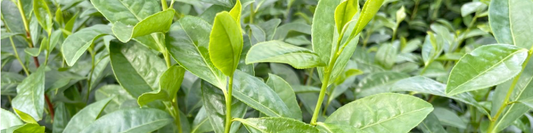
Notes at origin: Uji 2024
Share
Ryan and Zongjun (00:00)
Hello and welcome to the Specialty Matcha Podcast. My name is Ryan. This is my cohost, Zongjun Hello, hello. And we're the co-founders of Sanko Matcha Products. Yeah, we launched this podcast to discuss our learning journey, matcha, share startup stories and interview experts. And today we are in Uji again. Yeah, and this is actually a special episode. We found a quiet place along the Uji River and are recording live. So if the audio is not perfect, that's why. Right after...
Another day of burning hot sun. We continue our learning journey in this wonderful place. Yeah. So we've now met with quite a few tea farmers that we've developed some impressions and done a lot of learning. Some more traditional tea farmers, some more innovative tea farmers from not just from Uji, but in Wazuka. So we're learning all sorts of interesting perspectives and wanted to share things that are like...
kind of directly from our notes and some stories that we've heard. Trying to source tea here by meeting these different people and asking them questions and they've been so generous with their time and with everything they've been willing to teach us. So, Zongjun based off of everyone you've met so far, how has this trip been different than your expectations? My expectations? Good question. I honestly have very little expectation before coming to Uji.
have always envisioned or have heard people talking about how not open Japanese people can be in terms of sharing and telling stories. But it has really just surprised me how much we have learned by just talking to people. Not only about how to grow tea, how to make tea, but also all these interesting industry dynamics within... Some insider baseball.
It's quite a learning journey and storytelling time. No, absolutely. I was not expecting this either. I mean, my expectations, having done business in Japan before, mostly with large companies, I'm expecting the business card exchange, quote unquote, ceremony. was expecting a lot of formality. I was expecting to have very few emotions communicated in a meeting. Like, you know, I'm used to business meetings in Japan where I walk out and...
You know, I'll ask our partners, how do you think that went? And they'll say, I have no idea. And that was the norm. But so... just poker face, you know. Yes. From the beginning to the end. But that's not the case at all. Everyone's actually very open. And there's a lot of emotion being exchanged, not just words. Yeah, yeah, yeah. A lot of emotions. But you kind of see a little bit of that in some of the older farmers we have interacted with in terms of formality and the subtlety of communication.
But for younger farmers, it's really not the case. They're very open, enthusiastic, and willing to share and discuss. Yeah. And actually two of them will be on the podcast. We've invited them and they said yes, so they'll be on in future episodes so we can hear from their perspectives directly. Yeah. So what is the most interesting thing that you have learned in our second journey into Uji?
I guess it's how small Uji city is. Uji proper? So insanely small. I mean the city is pretty large. Yeah, but the production region is so tiny. For having Uji Cha be like the world famous like Bordeaux or like you know like Bordeaux basically like of tea. It's like the one brand name if you do know anything about matcha you know. I like tea from Uji. I like Uji Cha. Uji matcha.
And we're learning that there really, you you can import sort of a crude tea called Aracha from like Shizuoka or Kagoshima that are doing much larger volumes. Finish it here. Even have it 100 % of it be called Uji Matcha. Yeah, some serious tea laundering going on. There's a pretty massive distinction between Uji Matcha and Matcha from Uji.
that we are learning. And Marc from Ooika has talked a lot about this, but you know, it's big problem because apparently even in Japan, there's very little awareness. People don't even know where to look for actual matcha from Uji most of the time. Yeah, I mean like the outlet of all these teas are mostly getting controlled or monopolized by all these big tea makers. The gardens, the farmers in Uji actually had
has very, very little voice or representation outside of Uji City, basically. So we just finished a meeting with someone from a multi-generational family farm in Uji City over 300 years of history. And we to hear a lot of inside baseball about some of the dynamics that's going on. And one of the first things that we talked about were that these large brands that we all know as consumers, if you're into matcha,
I won't name any by name, but we all kind of know who we're talking about. They literally have all the power and they set the prices and you basically say yes or no. And if you say no, you can be punished and that buyer may never buy from your family again. The amount of control is kind of insane. Almost similar cartel pricing. The problem is, is that the wholesale buyers or these brands, these matcha labels have all of the power because they have
all basically reliable buying power. We were learning from a different farmer that you could buy like a thousand kilos of tea from a farmer, but if you're only going to buy it once, it actually is not really going to help them at all. These farmers need predictable revenue to maintain their businesses. And in fact, that thousand kilos that you buy from them one time might actually hurt them because now someone else, they didn't have that volume to sell to.
someone who's going to become a repeat buyer. Unless you become a repeat buyer and ensure their revenue stream in the future. otherwise, really selling you more tea will be a risk for the time being. And not only do these big buyers, big brands control the procurement, they also control the market, they control the distribution.
you know, all of these famous schools like Omotesenke Urasenke the instructors work with all these big brands, big names and use their tea through their instructions and essentially educating the future consumer of matcha, you know, about what to buy or what to appreciate. And their taste can be very distorted based on the tea they end up getting taught.
We learned quite a crazy story from one of the farmers in Uji that some older ladies who were tea ceremony practitioners, experienced in matcha, came by, drank his tea, and the tea was a honzu shaded asahi that's very little bitterness, very smooth, very creamy. But the old ladies told him that if given the opportunity, she will not pay for this tea.
Yeah, she almost asked not to pay for it because it was not matcha. It's not bitter. Thus, doesn't consider as matcha to her. It's a wild story and it's so interesting. Where do you go as an average consumer to learn anything about matcha? Well, you go to the matcha practitioners, you go to the tea ceremony schools. You ask your Urasenke or Omotesenke or some other tea ceremony school, you know, what's good? What do you like to...
tell me about good matcha. And they of course tell you to the brands and the brands have traditionally all the buying power. And not only do they have all the buying power, but anything that makes that matcha special is immediately obscured under whatever poetic name, take Hatsu Mukashi for example. So like if you're working really hard creating some of the best tencha from the best matcha farmers, and you know, most of it gets sold wholesale and gets blended, they don't even know where it's going.
as it gets shoveled into these various blends. And of course, some of these blends have a lot of history, but they also have the relationships with these tea ceremony schools, which is why you'll see the Omotesenke iemoto preferred X blend, or the Urasenke iemoto iemoto means Grandmaster, preferred X blend, coming from all of these houses. So you have a weirdly vicious cycle of abstraction, where new value and consumer relationships get separated.
again and again and again from the farmer, through these brands, through the tea schools, and then to the end consumers, creating a very weird world of matcha that we live in today. Even, we're talking about this on a different episode, but Hatsu Mukashi is basically meaningless. is not only a poetic name, but even between different vendors, it can mean something completely different. So if you're someone, I don't know, and...
country that doesn't have a lot of matcha infrastructure you buy a Hatsu Mukashi and you think you're developing a preference for Hatsu Mukashi and then you switch vendors you might get a literally completely different product. It's almost as bad as the term ceremonial grade. It is completely meaningless and all that you have to stand by it is the reputation of the vendor that's selling it to you where it could be like the bottom of the barrel meant for a matcha latte. This is not very high quality stuff to
the best of the best. Yeah, I mean the name is really a disguise of a flavor consistency that can be, you know, managed by these blenders so that they are not constrained or tied to certain garden. for like future date like these gardens are basically components of a larger machine that can be swapped by these big blend houses. So they really
They have the monopoly to not only control the production but also control the consumer that will end up tasting this product and educating them what's good or what's not good. And when you talk about appreciation of matcha, right now and in the past, the status quo is the appreciation of the preparation. Someone making you a bowl of tea in a ceremonial way, in a ceremonial context. But it's not even appreciation of the...
My biggest problem with chanoyu is that tea is not really the center of the whole ceremony. It's everything else. Like sometimes. the tea. most of time you don't even know what the tea is that you're drinking. Yeah. And how to make tea, where much it comes from, how it's made. It's never the topic of a tea ceremony school lessons.
And I think that this new wave of consumer desire to learn about where your food comes from, like it really started in the 1990s, which has led to an explosion of all these craft industries, ranging from coffee to chocolate to tea, to wine to beer to all sorts of things, is that people want to know where their food comes from.
But even now you see these specialty olive oil brands talking about where their olive oil comes from and which cultivars were used and it's all headed in that direction. So these systems of the past made a lot of sense for this market. Who were the consistent, reliable consumers buying matcha 50 years ago? They were the tea ceremony schools. It makes sense that they got their own custom blends. It makes sense that it was all abstracted away. They didn't really care whether or not the tea was honzu shaded.
Probably a lot of it was until, I guess, 50 years ago we saw the introduction of some other shading methods. You know, it was all abstracted away and it kind of wasn't the point, but that's not the direction that modernity is going. Largely because consumers have lost trust in the food industry. And now I'm not saying you shouldn't trust these traditional houses, but you know, when you look across industries, you see all sorts of bad practices, whether or not it's wheat or barley or chocolate or any of these commodity crops, where you have
In other cases, you do have colonial economic systems in place. I don't think I'll go as far as to say this is a colonial economic system, but this is definitely an economic system of the past where the farmers are on the very bottom. Yeah, yeah. for consumers nowadays, matcha is consumed very little by younger generations in Japan.
the rising consumer demand from the West, this new mentality, I think, will help shape how much it will become in the future. This idea of knowing your food, knowing where it's coming from, this whole farm-to-table idea that really gives the farmers a stage or a spotlight for them to shine. Which is a very exciting thing. And one of the things that we've been asking people is like,
comparatively, how much of your business is with these new single origin, single cultivar, Western matcha brands versus to the wholesalers. And they say that most of the volume goes to the wholesalers. So there's still tons of supply of this well cultivated with tons of intention, single origin, single cultivar matcha to grow into other markets because there's just no desire. It's a shrinking market and very little desire.
domestically in Japan for these types of products. There hasn't been historically and there isn't even now. And even when a traditionalist walks into a matcha shop that has matcha, it is owned and operated by a farmer and has single origin, single culture matcha walks in and says, this isn't matcha. And this just goes to say that truth is there is no such thing as truth in this world of matcha. It is all perspective and the layers of separation between
The blenders and millers and the farmers and the tea ceremony practitioners and the consumers are so radically different. It's hard to wrap your mind around. Some of these people, like, we'll ask them questions about certain milling topics or certain blending topics or poetic names. And they're the producers of this product and they'll say, we have no idea. They just don't know. Yeah, the discrepancy of knowledge and information is
highly segmented and it kinda confuses me like why is this the case do people not have desire to learn things out of their specialty like why is this so tightly segmented I don't know
You mentioned about when Marc was doing a major tea event in Penn State and all of these tea instructors coming from other tea houses were taking notes as well. Learning about how tea was made in the first place. Being a tea ceremony instructor. It's very interesting. Yeah, I mean if you talk to the average tea ceremony practitioner, Ura Senkei, Motta Senkei, whatever, who does Chana Yu, they know remarkably little about tea.
remarkably little. In fact, they most likely will not be able to answer your questions. I was recently at Penn State for an Omotesenke demonstration and was meeting some tea ceremony teachers there and talking to them about matcha and it became very obvious that, you know, that's just not their specialty and they don't claim to know anything about it either. It's just really a completely different world. So you have these weird pockets of knowledge where they don't actually...
know very much about one another. like for someone to say that something isn't matcha or isn't traditional or is not authentic, we have a tea ceremony practitioner calling some of the heritage, thoughtfully crafted matcha left in Japan that makes up some of the teeniest, tiniest volumes. Some of the best tea grown in this country say that they don't want to pay for it because it's not matcha, because it doesn't taste the way that they know. This illusion of
Quality happens within Japan as well. It's pretty crazy. Yeah, no, it's it's it's very bizarre. It's worse than my assumptions were From learning about this outside of Japan and not talking to people who are actually on the ground So one of the other things that we learned that's very interesting and I'll give you some statistics here It when it comes to Uji matcha itself, there are 50 hectares likely less of matcha in Uji City
That is wild to comprehend. Less, it's about 0.138 % of the tea production area in Japan. And what's happening is there's tons of tea being imported in from other key areas in Kyoto Prefecture, like Uji-Tewara or in Wazuka, and also tons of tea from Kagoshima, which is highly industrialized. And Shizuoka,
which is also high volume, highly industrialized for the most part. Of course, there's exceptions. But those are places that are able through, I'd say, agricultural innovation really have remarkable yields and efficiency to pop out. I mean, the total tea production in Japan is 75,000 tons. That's not just matcha but also other teas. And for tea coming from Uji alone, only 30 tons. It's 0.04%.
of the total tea yield. That's definitely not enough for people out there buying Uji tea. So imagine how many Uji teas get sold out there that's not really coming from Uji. Yeah. Well, so Uji matcha is not a very well regulated term and we learned something very interesting. One, you're allowed to label tea from other places as Uji matcha.
So long as it's finished. So aracha is kind of the crude product, which then I think goes through basically another roast and gets de-stemmed and de-veined. And then it's tencha, which then can be milled. So that whole step, so long as it, so far as we understand, so long as it happens within Uji, it can be sold as Uji matcha, least within Japan. But Uji matcha is actually a trademark. And what we learned is that about 10 years ago, this trademark was owned by a Chinese company.
Yeah, and in China. China. In China. there, like, about 10 years ago, it's not really just Japanese tea, could really be Chinese tea too. And the Japanese government sent a diplomatic claim to Chinese government and then now the trademark has returned to Japan. It still gets licensed back to some Japanese-owned Chinese company in China and continually making Chinese matcha under the name of Uji till this day.
So it's still basically meaning this. And most Uji Matcha that people are drinking is not Uji Matcha. And we're also learning that a lot of the retail presence in Japan, where tourists buy Matcha, are also Chinese owned. And they're making Japanese tea. That's true. And doing excellent marketing. But you don't really know how the tea is getting made.
and where the tea is coming from. one knows. It's very, very bizarre. Yeah, it's very bizarre. So it's not a protected region at all. And we were told that even local Japanese people that want to find Uji from Uji tea, matcha from Uji, is that they don't even know where to look. And apparently it's... This was an interesting perspective. There are some wealthier individuals, and we're not just talking about money, but also cultural capital.
and the ability to appreciate things within the domestic Japanese market that have direct relationships with farmers. Kind of in a similar way that like really like some of the best wine in the world was just purchased directly. A consumer purchasing it directly from a domain that they have a long-standing buying relationship with and that those individuals, one, usually have a lot of money but they also have quite a bit of taste to have proved themselves that they can appreciate these products and add it to their collection and age it, whatever. At least in the case of wine.
But a similar thing happens, but it's very small. then all of the rest until very recently with the rise of these new Western companies coming in and buying it and marketing it as a specialty product and putting a big spotlight on what makes it special and how it's cultivated, how it's produced, et cetera. You know, it just all went to the wholesale buyers and just disappeared into who knows where. It's crazy. Like, I mean, by the end of the day, know, who really
wants to have the brand Uji protected. It's really just the farmer. The big houses don't want it to be protected because they want to blend in to other tea from other regions and so get sold as Uji. The consumers doesn't really care. And it's really just the Uji tea farmers that want the name Uji being protected. Yeah. And they are numbered. We learned that there are only 30
I'm at 37 to 38 tea farmers in Uji nowadays. Uji city proper. Uji city proper nowadays and the number is decreasing. Unlikely only 5 to 6 farmers that do honzu shaded with the straw canopies to shade the matcha. So these numbers are wild. It's very small and apparently almost all of it is asahi that's honzu shaded and apparently maybe there's a few that do samidori as well.
It's very interesting. The performance of tea leaves and not only their shape, but their characteristic has very significant impact on how they get processed or get harvested. One of the reasons that Asahi is usually Honzu shaded is that the tea leaf doesn't get hardened quite as fast as other cultivars. Because if you're using Honzu for your shading process,
It's quite laborious compared to Kanreisha or the cheese cloth, the black cheese cloth. it takes quite a longer time for people to pick the tea by hand. So if you are doing so for other tea cultivars, know, the quality might not be as high. Absolutely. What are some other good lessons that we've learned by actually visiting these places and touching the plants from what we've learned from these farmers that we didn't already know, that's not commonly talked about in...
English language knowledge or publications or social media feeds about matcha and its production. One thing that I learned that's very interesting that really doesn't get talked about by a lot of these western English publications is how tezumi actually works for tencha. So if you're familiar with how Chinese tea gets picked in China,
You are really only harvesting the top of the tea plant, like the most tendered bud, maybe one or two. The first and second leaf. Yeah, first or second leaf following by the bud. But for Japanese shade-grown tencha you are picking individual leaves, and you are actually keeping the little bud on the twig for future growth. So like in the second or third harvest, those little buds will turn into larger leaves again.
and then they will get harvest in the future. But you're only just picking individual leaves. And the most umami, high quality tea leaves are actually the bottom ones because they receive even less sunlight from the other teas that are on the top. So they actually have the most concentrated amino acid content in the tea leaf. So that was very, very interesting. Very counterintuitive. Very counterintuitive. Chinese tea perspective. Yeah, yeah. But, you know,
This is just for tencha just for matcha. For Sencha and other Japanese tea, the harvesting method is identical to Chinese tea. Just the top part. just Kuro and Sencha, they were telling us that's more of the pick for that. That was very interesting. Yeah. And also, there's very interesting labor shortage, not on the farmer, but on the tea pickers. There are these old, kind, nice little Japanese grandmas.
that you probably will casually run into in Uji City and they will just turn into tea harvest tezumi Superman during harvest season and they are also numbered. So we learned something very interesting from one of the tea farmers is that a lot of these tea gardens are just nowadays sitting there empty, not because or not just because if no farmers wants to grow tea out there, but also the farmers are running out of bandwidth during harvest season to harvest those tea.
Because there's not enough of these nice little resources. There's still nice little grandma out there picking tea for them. That's very, very interesting. You know, in China, that's also a problem too. Younger people just like not interested in this very laborious, know, like very, very hard work during, you know, peak summer, like under the sunshine and you are in a tea field all day.
And there's insects, assuming there's not too many pesticides or herbicides. It's hard work. And in China, there's this little grandma community that will just travel from provinces to provinces following the tea harvest line to pick tea from all the way from Fujian to Chaozhou to Yunnan. know, like here in Japan, all of the tea pickers are sourced locally. There's no such thing as migrant tea pickers.
That's interesting. That's interesting too, because you don't see it in other areas. I know that there's a large tea plantation in New Zealand under the brand name Zilong. And I know that they fly in people from Taiwan, I think. It's either Taiwan or the Philippines. I don't remember which. Or skilled tea pickers. To hand pick tea. Because they can't source on that type of skilled labor locally. That's wild story. Have you tried their tea before? Yes, I have. really? Is it good? It's very different.
done in Taiwanese Oolong style. When you compare it price to quality, it's... I'll let people make their own judgments. But it's not bad. It's not bad. It's definitely worth trying. Interesting. it Taiwanese-owned or...? I don't know. I don't know. Okay. Interesting. But some pretty wild stories about the tea picker shortage. Yeah. What about you, Ryan? I am just still blown away at how different the cultivars look. Uji hikari with their wavy leaves and a slightly lighter color.
the asahi cultivar with these gigantic leaves relative to the others, the long, skinny, kind of almost sword-shaped samidori, the really dark green color of okumadori. It's just these, it's not subtle. In my head, I had never really pictured it, but it is so like, anyone could tell the difference. It's not... And we learned that it's not just the appearance, but the skilled or experienced tea farmer can smell.
The difference of the tea leaves when they're getting matured because they are matured in different times of the year. So they can actually smell the tea leaf and smell the difference, which is wild. The other thing that I found really inspiring and I believe Tyas Sosen talked about it a little bit in his book. getting to hear this firsthand was really interesting. He said a lot of the fertilizer, the natural fertilizer that's used.
like different fish byproducts and rice and sesame waste and oyster shells. Everyone has their own recipe, but they're all things like this. But they get put onto the soil and that is actually not the fertilizer. It's like the starting material and actually the local microbial flora of bacteria and yeast break that down and it turns white.
And it's actually fertilizer through natural fermentation. And it's another expression of the land itself and the microbial flora that are breaking down these things into their more basic nitrogen components or phosphorus or potassium components. And then it gets kind of tilled into the soil. It's really full circle. It was very inspiring to see some of these natural practices in action and tasting tea from these farmers who do this. It tastes
night and day difference than what I would call these umami bombs, which is what's probably very well produced tea using synthetic fertilizer though, that just tastes like umami, like just pure savory. But these are much more expressive in their flavor and much more complex. And I would say they have a lower overall intensity of flavor, but a much greater complexity, much more nuanced. Much more interesting.
like you can actually, you are actually tasting the local environment, the local terroir versus, you know, all of these other umami bombs. Technically, you know, you can really replicate that taste anywhere else in the world or getting very close because the entire production process is highly engineered. But for all of these
traditional natural plantation method garden in Uji. You are really tasting the local environment and especially the honzu shade. What we learned is that it not only shades the sun from protecting the straw. The straw like honzu is how you call straw. It's the name of straw in Japanese. But it not only protects the tea from the sunlight, but it also acts as a natural filter of rainwater.
And according to the farmers, these straws kind of can filter out some of the unwanted flavor from the rainwater and gives the tea a more of a pure kind of local taste. And these straws are all sourced locally too. Local rice straw. Surrounding all of these tea gardens, you have all these rice fields. And they're all sourced locally. And they're produced locally and they're decayed locally. Full circle of life.
put back into the soil. And all the works of the microbes too. I that's one of the things that people like about natural wine. Natural wine's so interesting because most wine is made by industrial yeast and you pitch in industrial yeast, which then breaks it down into alcohol. But in natural wine, it's the local yeast that's sitting on the skin of these grapes that ends up doing the fermentation and is really another dimension and
extension of what we can understand about a taste of a place and terroir and you know in a lot of ways these umami bombs using synthetic fertilizer really seem to be just like accommodating the average Japanese consumers preference for umami and It's something that they can then easily appreciate in a tea and easily controlled it easily maintain the flavor consistency Yeah
I think that's really the reason of why these things exist and how they're getting, how consumers are getting educated that these are the flavors that they should be appreciate. Yeah, and there's nothing much deeper there. It was interesting, I think someone was saying there's a study, there was a study done in Japan looking at the correlation of umami compounds in tea with price and there seems to be a very linear correlation. So it's probably a huge...
profit incentive of doing a lot of these practices as well. you know, like after being in Uji and after learning from all of these farmers practicing natural tea plantation, I don't think that the actual cost of making tea is linear with umami taste. The cost and labor that went into honzu shading, that went into creating all of these nuanced beautiful flavor in the tea, it's
far more expensive and labor intensive than just dropping synthetic nitrogen bomb into your soil. absolutely. It's pretty interesting and really sad. I wish we had more time to talk with some of these people about what they think about these tea competitions, but all of this competition grade stuff that I've ever had.
You know, they generally lean towards more umami bombs and I half wonder if that's good or a bad thing for the industry. Like you get a lot of recognition, but who decided that that was going to be the top quality? I'm aware that those, all of these decisions filter down to get a spotlight of a national award winning team. What I have been seeing, you know, how these national awards gets labored on packaging is the big houses.
Yeah, well, it's a small house. I mean you see people like Tsuji-san winning. That is true. All the people that people like Ooika some of the people's cattle that work that they work with. That is true. That's one way that they gain. That's how one way we know who the people to contact out to. people write about them in English. Yeah, but from one of the tea farmers that we visited today telling us that, you know, if you want to be competitive or want to participate in these competitions, you...
would want to drop a lot of fertilizers in your soil and kind of exploit the potential of the soil in the near term. And he doesn't necessarily do that, but it's one of the, I guess, shortcomings of being too focused on creating competition tea is that you are not necessarily working with the soil, working with the environment. You are basically stimulating the environment to create something unnatural.
Weird system of perverse incentives going on. We are just skimming the top of it. It'll be interesting to see how our opinion evolves over the years as we get deeper and deeper into this industry. But one thing is very obvious and certain is that the current system really is not the most sustainable for farmers and almost, I would say, even fair. And it is against the values that most consumers have outside of Japan.
about knowing the source of the food that they're consuming. It's really against everybody except the big blenders and the big houses. If this system continues to exist and fewer and fewer people in Uji wanted to make tea and all of these tea gardens went into oblivion and you are basically left.
with all of these blenders importing tea from Kagoshima or other regions into Uji and gets processed as Uji tea. The true Uji tea will cease to exist. it will be a very sad potential future. A little crazy actually. Yeah, it would just be a shell. Just a shell, a weird legacy, legend that is so disconnected from the reality of Uji tea.
is and should be and what made it famous in the first place. Some very strange optimizations going on around exploiting this name Uji tea and weirdly enough we heard that there was a sort of a coalition of Uji City tea farmers that tried to trademark the term Uji tencha because that wasn't taken to kind of protect the region in similar ways.
like a DOC or an AOC type classification. They were threatened. Yeah, they were threatened. They were threatening to take them to court, these big blend houses, if they tried to trademark this. So there is some real power imbalance and distortions going on.
So everyone who's a consumer that's listening to this or another business that's listening to this, we need to really know the source of the things that we're buying to make sure that we're not slowly, accidentally, unintentionally destroying what could be a very vibrant future of Uji-matcha from Uji.
Or Uji Matcha, like this really should not be a stigmatized name. And we're not curious either. mean, fine, it Wazuka-cha. I'd love to learn about the unique terroir of Wazuka and what they're doing there. Or Uji Terawara, or Kagoshima, or Shizuoka. Or Yamecha. I love Yamecha. Why do these people have to hide by dumping it into this one thing that everyone happens to know and that tourists want to buy? It's really not a sustainable future.
And there's probably all sorts of interesting stories to tell in these other places. Yeah, it's a... It's really a value of a money problem. Tea obviously gets sold for a price if you name-tag it Uji cha But it really should not be the case. There are good teas growing all over Japan. they should be back to our application of transparent labeling. If consumers are educated with transparent information, they can naturally develop their own preference.
of all these regions and they can choose to make purchases or the money will naturally flow into places that produce good tea or tea that fits to a certain consumer's quota. So I think the future really should be shaped by a transparent information flow and the consumers need to have the freedom to choose what kind of tea or have the right to know what tea they are actually buying.
I think that's very important. Yeah. No, absolutely. That's essentially how you develop preference to be in this. It's anti-specialty. I've been going back and forth as we talk about specialty matcha and how we define a specialty product and sort of the words and labels and the terminology that we're using on this podcast. And I keep going back and forth whether or not I personally consider these large traditional blending houses and whether or not they're specialty matcha.
And because some of these blends do have some heritage, and these are very old companies that have been around for hundreds of years. But the more I learn, think less and less they're not a specialty. It's not specialty matcha from these large blend houses. Some legacy dinosaur Maxwell. Maxwell house equivalent, maybe a couple steps higher. Definitely, I mean, it does not encompass any of the things that we value in specialty.
around transparency, around the ability to cultivate your own preferences, about understanding the taste of a place or the taste of a process. It's not specialty. No, and they don't even treat their vendors or suppliers nicely. That's very sad. Makes me angry a little bit. It really feels like these old school, archaic, post-colonial agricultural systems that buy and sell commodities and put nice packaging on it and sell it as
name your mass market product. Definitely not special tea. Well, it's only our second journey in Uji and we have learned, I would say, quite a lot before we got here. It's quite an amazing place with all these interesting dynamics and good tea. My initial impression of Uji tea has always been very umami driven, but after tasting some of the actual good quality tea produced locally,
Which by the way, you're really not going to find retail or maybe at some cafes. That is true. You really have to go to the source. You know, like I like Uji tea. Uji tea is great and it's a great city. It's great environment and very nice people. I'm definitely coming back. Yeah, we've had a great trip so far and we're headed to Izumo city and we'll talk about some impressions there and to Yame as well and then to Tokyo and yeah.
be on the lookout for new content from us. So thanks so much for listening. We really appreciate the listenership. If you have any strong opinions or want to talk about this topic, please just DM us on Instagram or shoot us an email. We'd love to talk to you. Or if you have a unique perspective that you'd like to share on the podcast, we'd love to hear from you as well. Thanks so much for listening and see you in the next episode. See you in the future.