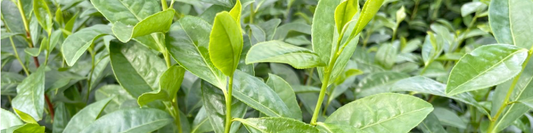
Interview with Tea Nursery, Pau
Share
Ryan (00:00)
All right, we're live. Hello, and welcome to the Specialty Matcha podcast. My name is Ryan, and this is my co-host, Zongjun
Zongjun (Sam) Li (00:06)
Hello, hello.
Ryan (00:07)
and we're the co-founders of Sanko Matcha products.
Zongjun (Sam) Li (00:09)
Yeah, so we launched this podcast to discuss our learning journey in matcha, share startup stories and interview experts. And today we're happy to have Pau from Tea Nursery. So Pau and I met during our last sourcing trip in Japan and we learned so much about the tea industry in Japan and we kind of felt the need to invite you as a guest. And we definitely indulge a little bit when we were writing the questions that we want to ask.
Ryan (00:33)
haha
Zongjun (Sam) Li (00:34)
So Pau, can you maybe share a little bit about your background and how you came to start Team Nursery?
Pau (00:40)
Yeah, of course. That was quite a long list of questions. We will see what we can cover today. Well, my name is Pau. I'm
from Spain, from the Catalonia region. that's my background is in coffee. I started when I was in university as a barista kind of part-time job. And then you end up lacking more the job than the studies in a way.
and I worked in that company
Zongjun (Sam) Li (01:08)
Mm.
Pau (01:08)
for seven years mainly in the coffee side and well head trainer and like I ended up doing some quality control for coffee and stuff like that as well but they also operated a tea shop as well in that tea shop they have like quite a wide
Zongjun (Sam) Li (01:22)
Very cool.
Pau (01:23)
variety so from like more like basic super blended dried fruit
kind of infusions all the way up to pours and like crazy white teas and gyokuros. So I was like exposed through there. I was like, okay, that sounds interesting. Sometimes for covering lunch breaks for people, I would just like help in the tea shop. That's where it comes from the tea at the beginning. Yeah, years passed and I wanted to just like switch to tea. So...
I always try to study as much as possible about the topics that interest me. So I just really started digging very, very deeply into tea. And I did some online education courses with some associations out there. Then I visit Japan for a tea master course for two weeks last year. June of last year, June, July, something like that.
And then I had the opportunity to work for a year in a tea farm in Japan. So I took that opportunity which like really, really skyrocketed like all the knowledge and taking notes every day and like trying to leave the tea in a way. And now I work in a tea farm. So
it's been a huge transition.
And the tip nursery, which is my blog, that was two years ago, exactly like next month, I believe. It was part of this gathering of information for me to learn, like, wait just to share it with others as much as possible. I don't have the time to write too much, but I have a lot of piled up content that hopefully will roll out eventually.
but I specialize in very technical details as we might talk about later. So it was just like wanting
to share.
Ryan (03:08)
Yeah, your blog is incredible.
Pau (03:11)
thank you. It's so technical that sometimes it's like, it's actually like this is just too nerdy. Is it too much, too technical? But people seem to enjoy it because it's a...
highly specialized in things that either you need to learn a lot of Japanese to be able to read it or just spend a lot of time between translation tools and it's a little bit of a pain. So yeah, but that's a little bit how it came to be, I guess.
Ryan (03:37)
Thank you for doing it. It really is an incredible service for anyone who wants to learn about cultivars or the regions or really the technical details behind how things were bred or invented. It's been my active reading list and I'm slowly chomping through all the articles, back reading everything, and I'm learning so much that you just don't hear about in other pockets of the internet, at least in the English-speaking world.
Pau (04:03)
That's one of the
reasons why I started
writing the blog post and putting them out there because I wanted to know about this thing. But okay, I have to read it in Japanese and then it's like there is broad strokes here and there but that was not satisfactory for me. So I tend to just go very deep into rabbit holes. So I'm sure there is someone out there that...
also enjoy that kind of content sometimes. So I'm glad to hear that you like
Ryan (04:32)
sure.
Pau (04:32)
it.
Zongjun (Sam) Li (04:33)
Yeah, well, as we are roaming through Japan, we realized that the language barrier is definitely a thing. Really gate-kipped a lot of very valuable information.
Pau (04:43)
Yeah, sometimes it's difficult, like the language barrier, sometimes of course like you are like just coming out of nowhere, they don't know you, you don't know them. Like, of course, people are a little bit more like closed. most farmers are very happy always to talk about their farm, about the plants, and nerd out a little bit of like, yeah, my tea field is the best one in the region, blah, blah, blah,
So after you meet them for a few times, they usually open up and you can have like very nice interesting conversations with them, but it takes a little bit of time sometimes. It's a little bit more different if you are talking to more like the industry side or like like the research centers. You ask questions, it's like who are you? Like why are you requesting?
this very specific copy of a paper just to read it. It's like, eh? But yeah. But in general,
Ryan (05:40)
Yeah.
Zongjun (Sam) Li (05:40)
Yeah.
Pau (05:41)
they are very nice, the pharmacy is like... You also need to know what you can ask at each stage of getting to know them, that just goes like as a personal relationship with other people as well.
Ryan (05:56)
sense.
Can you share a little bit about what it's like to work on a tea farm day to day? What is it like you do and how does it change with the seasons and how you interact with the people you work with? We'd love to learn a little bit more about what does it actually look like to be a tea farmer full time?
Pau (06:13)
Okay, so tea farming According to other farmers in Japan that are not farming tea is one of the craziest things that you can do apparently like I was going to help an association next to Wazuka in a city, well a village called Tawara is in Nara prefecture and they were planting kiwi trees
And they were like, OK, like, you here on vacation?
Zongjun (Sam) Li (06:41)
Mmm.
Pau (06:42)
Or, no, no, I work in Wazuka. I work in tea. They were like, in tea? You are crazy. Like, that's the most heavy farming that one can do. And I was like, really? And I think later that year I understood why, especially in spring. It's like winter is very chill.
Ryan (06:59)
Ha
Pau (07:00)
There is not much to do on the fields. So I'm weeding.
there is, I don't know, winds or a tree fell down, you go and take care of it. Prepare shading structures, stuff like that. But then from March is trim the bush, then people start to fertilize bushes, then you start maybe shading or a little bit more of trimming, then weeding, preparing for harvest, then when the harvest starts, it's just like...
all of those things happening simultaneously because you can be operating, I don't know, one field or 30 different fields. So everyone has different
behaviors, different rates of growth, different weather environment.
Basically this year I think we started working from the 11th of March in the fields. Harvest was the 23rd of April, I remember it very well. And from there when I realized it was August already. So yeah, it was very busy. so wake up in the morning, go
Ryan (08:05)
wow. That sounds intense.
Pau (08:08)
to the fields, have a lunch break, go to the fields, go to the factory.
spend a lot of hours in the night processing tea, go to sleep, wake up, repeat and that's your life for around two months for spring harvest. Then you get a couple days of relax, of rest and then you start trimming again and fertilizing again and trimming and shading for summer and preparing for summer and a lot of weeding and now we are in September.
and now we are chilling a little bit cleaning the factory preparing for autumn harvest which will be starting for us in maybe three weeks two weeks more or less and then rinse and repeat when you realize it's Christmas and when you realize again it's March and turn the engines on again and let's go
Ryan (09:04)
It starts over.
Pau (09:05)
it's probably one of the
hardest jobs I have done in my life and it's very rewarding but it's physically exhausting and then we factory duty. For us we do a lot of tea tourism activities and education activities so you have that on top of the high amounts of physical work but it's very rewarding to see how the plants behave, how they grow.
when do they suffer a pest disease is like at night is like, my God, is that film going to be okay?
like a very deep personal connection with the plants.
Ryan (09:43)
That's cool. must be so tangible to see it from beginning to end.
Pau (09:48)
Yes.
Ryan (09:48)
From like soil management, from the weeding, all the way through like tasting the tea. It's an experience so few people get to have and we haven't really had that either. So it's
awesome to hear.
Pau (10:01)
It's very rewarding
when you spend, I don't know, a couple days in the heat of summer just harvesting and then you go to the factory and you're sweating like crazy because it's 39 degrees and all the machines are running at
Ryan (10:16)
wow.
Pau (10:17)
90 degrees Celsius constantly for hours and you're just keeping yourself hydrated as much as possible and then...
You are like, my god, the tea going to be OK? Is it too dry? Is it broken up? Is it too much dust? And then you try the next morning, and it's like, OK, not that bad. Like a very rewarding kind of like, OK,
Ryan (10:36)
Hahaha
Pau (10:37)
the sweat and tears. But after all of that effort, the tea, it always rewards you in a way. It's a very rewarding experience to the next morning try the tea that you have harvested maybe.
20 hours ago. It's a luxury, honestly. It's something that almost no one can have such fresh tea.
Because for matcha, of course, you need to go tencha over and grinding and aging and all the steps. For sencha, it's a little bit more direct. But it's such a unique experience. And then you can drink that tea every day of the year. And every day you will see how it evolves from kind of the sencha flavors. It will mature a little bit. It will calm down. And then it gets a little bit of a different flavor at the end of the season.
It's truly a luxury. I feel very honored to be able to experience that.
Ryan (11:38)
That's awesome tasting that transformation. So it moves from like very green notes like Shincha and then I guess it settles into itself. And you said
Pau (11:47)
Yeah
Ryan (11:48)
it really changes towards the end. How does it change?
Pau (11:50)
Yeah, it kind of mellows
during the year in a way. Like it can be very pungent, grassy, cut grass, like very green and sharp in a way. And sometimes the body
Ryan (12:04)
Okay.
Zongjun (Sam) Li (12:04)
Hmm.
Pau (12:05)
is a little bit more on the light side. I'm a terrible taster, but that's what I felt at the beginning. Then maybe after two weeks.
you kind of start to see like, that sharpness is a little bit more like rounded out and about the two to three months mark is when the body starts to develop it becomes a little bit more sweet that noise of like freshness noise in a way goes out and it's a little bit more expressive a little bit more like open
Sometimes you cup it in the morning and it's like, it's like a little bit like, I don't know, maybe it's too grassy. Maybe we even do the processing, right? My boss and the head farmer are always like, no, no, no, chill. Like let it be for a couple of weeks and then we will really know. It's too fresh right now to be able to evaluate it. And then after six months, I think is
Zongjun (Sam) Li (12:56)
Hmm, interesting.
Pau (12:58)
the best time to drink the tea, to be honest.
A lift for me.
Ryan (13:01)
Is it when you have different cultivars in the beginning when it's closer to Shincha and very fresh,
Pau (13:08)
yeah.
Ryan (13:08)
do they taste more similar and then taste more distinct as they get older or is the difference immediately apparent or it grows?
Pau (13:18)
I think the general evolution is the same of course different cultivars taste different and some of them taste very very different if you compare I don't know something very early with Okumidori which is extremely late cultivar like of course they will taste very different because maybe there is like three weeks
weeks and a half of difference timing wise.
Ryan (13:42)
yeah, cause you can't even make the comparison. Okay.
Pau (13:44)
Exactly,
exactly, exactly. I you could if you...
I don't know. But then you have to source from different prefectures. It's not like you can have it from the same village or something like that.
Like when we harvest,
Zongjun (Sam) Li (13:56)
Hmm, interesting.
Pau (13:57)
I don't know, when we harvest Yabukita in one field, the closest field that has your Okumidori maybe we harvest it like...
at least two weeks later, I would say.
depends on the situation.
Also, if you shade it or not, then you have to wait for the shading to develop a little bit more. That also affects... It's very difficult to compare. That's also something I want to focus more on this next year. Like really knowing the cultivars by the taste of them and see what are the commonalities among all the Okumidori's because of course the...
the farmer technique and the farmer field management will affect it so much, like the processing will affect it so much that it's very difficult to say like, this is, of course, this okuhikari because it has this very particular note. There is commonalities, but if you burn it in the shaping machine, then it will taste like a hojicha and that's not from the cultivar, that's just a mistake, which...
Sometimes it's a good thing. have
Ryan (14:58)
Yeah
Zongjun (Sam) Li (14:58)
I'll
Pau (14:59)
during my practice runs, have like scorched some tea sometimes and there's like, well, it gives it a nutty taste. It's so bad. Like, it's interesting.
Zongjun (Sam) Li (15:09)
Pau, can you maybe give our listener some background information about cultivars? Like what art they developed in the first place and how do they being used right now in the contemporary team industry?
Pau (15:22)
so for cultivars, think the vocabulary can vary industry by industry. Like there is this huge debate of cultivars and varieties and varietals, at least in the coffee industry. think in the... Maybe you, Zongjun, you know more about that, is the wine. There is also all this
Zongjun (Sam) Li (15:42)
Mm.
Pau (15:43)
varietal kind of vocabulary going on.
Zongjun (Sam) Li (15:45)
different grapes.
Pau (15:46)
Yes, so a cultivar is a plant variety that is cultivated. So it's a cultivated variety, something that you select out of a wild population. And you say, this plant looks super beautiful. It's super tall, and the leaves look great. So you just take that plant, identify it, and then you propagate it.
some crops can propagate through seeds and the characteristics will carry on into the seeds but most of the time that's not the case so that's when you do grafting or you the cuttings or whatever what is a variety then? so a variety is a botanical term and that's like sub species of a plant so they have characteristics that
differentiate them from the from in the main species, but they can still interbreed between them. So that would be Camellia sinensis, Variety sinensis and Camellia sinensis, Variety assamica. So both form part of from the same family, the same species, but they have distinctive traits that we can say like, okay, this is obviously two different
subspecies but they can still cross breed among themselves because they are very similar still and those distinct traits
Ryan (17:13)
Okay.
Pau (17:14)
they usually carry into the next generation of the plant and the cultivar traits so that beautiful glossy green leaf if you take seeds from that plant those traits don't cross over so to maintain those favorable things that you like
you need to propagate by cuttings. So a variety is like a little bit more of a broad subspecies kind of selection. Cultivar is this plant
Ryan (17:44)
and we'll be right back.
Pau (17:45)
in specific. We like the traits of these individual genetic material and you just clone it. Like if you could do clones of like, we really like that human, you will never get a copy of the same one. So you will have
Ryan (17:56)
Yeah
Pau (17:57)
to clone a human, right? And then varietal.
which is something that
Zongjun (Sam) Li (18:00)
Hahaha
Pau (18:01)
we see floating around. And this is a huge debate I have with a lot of people. It's not a science botanical term. It's more of an industry term, in a way. It's super big in wine industry, coffee industry, as well. It's more like an agricultural term. When you do a product that is a single variety, you can call it, it's varietal, whatever.
but it's not like a technical defined botanical term in a way. And I'm not a botanist, I'm not an horticulturist, so take all of this with a spoon of salt. But I hope that kind of clears a little bit the confusion that might be around it.
And then the second part of the question,
Zongjun (Sam) Li (18:47)
Very interesting.
Pau (18:48)
I forgot, what are they, how they are made.
Zongjun (Sam) Li (18:51)
Yeah, that's right. do these cultivars made from, let's say, cross-breeding from some local tea research institute in Japan? Or do farmers also do their own crossing? How do they generally get made? And how do they get their names from?
Pau (19:12)
Okay, so that's interesting. So first of all, like 40 at least, like the first batch of register cultivars, I think it was 14 or 15 of them, but in 1953. But of course the research on those started much much
Zongjun (Sam) Li (19:30)
Mm-mm. Very good.
Ryan (19:30)
Mm.
Pau (19:32)
early, like 1860s, 1870s. So there was this guy, Motokichi.
Tadamoto Kichi, it was a vessel from the shogunate and then the shogunate fell, that's like a different story, but then it became a tea farmer and the new government, the Meiji government sent him to India and China to like, okay, the exports are growing, we want to export tea because it's one of our crops and best thing, how we can improve our tea exports by mixing.
some better tea, better processing or better plants or whatever. So this guy went out, came back a couple years later with seeds from other plants that were not introduced in Japan. So that's genetic material coming more from the Asamica family.
So in Japan, we work a lot with the variety
of the Sinensis sinensis, not the Sinensis assamica. So most of the assamica introduced places were firstly introduced by the Motokichi.
Ryan (20:34)
this
why Taiwan has assamica too? Because it was under Japanese rule at the time, think. Because in Sun Moon Lake there's a lot of assamica, but I heard it was brought in by the Japanese. But maybe it's the same time period.
Pau (20:48)
be I'm not sure also there is this situation where I mean proximity wise is probably Taiwan is way more closer to Assam and parts of China where they grow as assamica so it could have naturally happened by trade as well from another source like monks at the time like that's how tea was introduced in Japan for the Tadamoto Kichi
Herloum seed introduced. It came off like, okay, we want to go outside to see how we can better our tea. The difference with Taiwan and Japan, when Taiwan was under the rule of the Japanese, is like if both countries produce the same type of tea, then they are like, it's like a conflict of interest a little bit. Like they are cannibalizing themselves. So I think that's why they
let those asami carbaridates specialize more on the o long side and Japan tend to specialize their
Ryan (21:47)
Mmm.
Pau (21:47)
breeding more into the black and green so they would not like conflict with each other I might be wrong but it's a
Zongjun (Sam) Li (21:56)
Interesting.
Pau (21:57)
possible explanation I have seen it mentioned somewhere that I don't remember but definitely not something set in stone I think
So from those seeds, will take some seed, they will grow it, they will make seedlings, and then they will say like, these three, the leaves are too small. These tea, the leaves are too big. This one just died because of cold weather. And eventually they set it on like, okay, we have enough leaf amount from the ones that survived. Let's make sample tea. They say like, the tea from this one in particular is amazing.
So you select from a wild population, you don't know what you're getting. Once you try it, it's like, we want this profile. And then you start propagating, get more trees so you can make more tea, so you can propagate even more and reproduce the plant until you can make fields and fields of it. So that's like very old kind of style of cross-breeding or like the first generations.
There was no method, they were figuring everything out, I guess. Actually, that's the material from the 1930s, 1940s. That's when Benihomare started. So they were singled out, or like, this plant has potential to become a black tea cultivar. And that was the one that would become cultivar number one in Japan. Not as in quality, registered as tea cultivar.
01 and that was the when Yabukita was registered the same year, Asatsuyu was registered the same year so that's more like first generation
cultivar registration so they will take zairai trees which is trees grown mainly from seed or like existing key gardens they will just like go and scout all the plants and select the plants that showed desirable traits then you move it takes maybe 20 years 30 years to make all this study
because most of the time you are waiting for the plant to grow enough to propagate it as well. Then maybe that was on the 50s or maybe 60s and 70s, you start to see registered cultivars that come from Zaira, so the same situation. But you start to see a lot of like, okay, we know that Yabukita is good. Let's pollinate plants with pollen from Yabukita.
or let's pollinate from other flowers on a Zairai rye field into Yabukita flowers. And genetic lottery will give us, I don't know, 7,000 seeds. From
Ryan (24:35)
Yeah
Pau (24:36)
those 7,000 seeds, we will grow them, see what happens, and maybe we end up with two cultivars at the end of the process that we like. So that's more like second generation.
cultivar that would be maybe from the 60s and 70s? Suyukhikari? No, Suyukhikari was quite recent. cannot think of a cultivar from that period of time right now.
Ryan (25:00)
who was paying for this? what was the... this wasn't tea farmers, right? Because this sounds like an incredible
amount of labor and effort. Was it the government?
Pau (25:06)
Well, it was a combination at the time. was mainly
government because the government was opening to the exterior like after the Sakoku, right? Japan was a closed country. The shogunate fell, then the Meiji Reformation happened. So they were very into like, okay, let's put money into this. Let's try to develop in that period of time, tea Japanese industry.
So they invested a lot of money on bringing people like Tadamoto Kitschi outside, bring seats, building tea schools to make black tea education for farmers. But the breeding itself, on that period of time, they... How to say this in English? They didn't have the notion of like...
If I have a plant that is called Yabukita and I make seeds out of it, the seeds will be different. But if I propagate, I will keep the genetic material in a way. They saw everything as a tea plant, not as, this plant is genetically different from this other plant, if that makes sense. So every plant was
Ryan (26:14)
OK. Yeah, makes sense.
Pau (26:17)
a tea plant.
There was no like, this one is more like a Samica or this plant is more like these traits. They will just like cross breed, get more seeds, plant them back on the field and genetic lottery. And that's how they did things. And it was more Tadamoto Kichi and one of his students, which was Sugiyama Hikosaburo, I think is the correct way of saying it. That's basically the guy that...
discovered or selected or bred Yabukita. So this guy was the first one that said, no, let's take individual plants. If you do seeds from those plants, the characteristics are not copied from one plant to the other. So we need to have the original plant take cuttings and then reproduce the plants by cuttings. So he was the one that was like,
yeah, that crazy guy that is propagating plants because he says that the genetic material carries over kind of situation. And he was right. So
Zongjun (Sam) Li (27:18)
haha
Pau (27:19)
that's why at the beginning all this cross-breeding is a little bit more like selecting out of a wild population because they still didn't develop the method to study cross-breeding like now. Like the cultivars you see now, they are very intentional of
Ryan (27:36)
Yeah.
Pau (27:36)
like...
We have Samidori. We know which are the weaknesses. So we are going to breed it with these other cultivar that we know is resistant to this thing that Samidori is not and try to get rid of the weakness. There was not that notion
Ryan (27:51)
Hmm.
Pau (27:52)
that many years ago, if that makes sense.
Ryan (27:53)
makes sense. Fascinating.
Zongjun (Sam) Li (27:54)
Do people
still make new cultivars nowadays?
Pau (27:59)
Yes, yes. I think actually in January last year the Shizuka National... was
Zongjun (Sam) Li (28:07)
huh.
Pau (28:08)
it the National? No, it was the Prefectural Research Center. They released two new cultivars. I
Zongjun (Sam) Li (28:14)
Okay.
Pau (28:15)
don't remember the names even though I was there and I was very lucky that I could taste them. was Tsuyahime, was it?
Ryan (28:23)
cool.
Pau (28:24)
I don't remember the name. I know I brought an article about it. can find the names later. But it was basically two new
Zongjun (Sam) Li (28:32)
haha
Pau (28:32)
cultivars and sometimes you can just check on the registry of cultivars. And it's like, yeah, this
Zongjun (Sam) Li (28:40)
huh.
Pau (28:40)
farmer, which is a farmer from Kagoshima has registered a cultivar. And it's like, OK, well, there's a new one now. But you could...
As an individual you could just like go into a zairai I field and say like, this plant is good. And register it and exactly.
Ryan (28:57)
It's a new cultivar.
Pau (28:59)
They will test it and stuff like that. And you need to provide some documentation. But that's basically what they are doing, right? And there is still some farmers that they grow their own cultivars. It doesn't need to come from the government.
I think you guys have talked about the narino, narino cultivar before So that comes from a zairai plant. Yeah
Ryan (29:18)
Yes.
Zongjun (Sam) Li (29:19)
Huh? From Norway.
Pau (29:21)
Horii Shichimeien or something like that. Yeah So he
Zongjun (Sam) Li (29:25)
Horii Shichimeien, yeah. Yeah, for each each minute.
Pau (29:29)
has two cultivars the narino and the okunoyama and they were registered 2000 something like that
Yeah, 2000 I think. Both of them are basically zairai And apparently they just kept track of those plants individually, then they went
the research center and they were like, hey, we have those two plans. This is the study that we did. Can we run tests with you? And then they applied for registration and they got accepted. But on those cases, usually...
not a cultivar that will be sold to other farmers. Because in the case of the narino, it's like double the amino acid content of the yabukita for example. So it makes sense for you to keep that plant,
Zongjun (Sam) Li (30:17)
Mm-hmm.
Pau (30:19)
because it's a good tool that you can use for your products.
There is another farmer in Tanegashima, which is an island south of Kagoshima. Is it Tanegashima or the other island? I don't remember. He has the soju, soju cultivar I think it's called. And it's an extremely early cultivar. So that guy basically is the first farmer that gets to market every year. Because it is the tea that flushes two weeks before anyone
Ryan (30:46)
interesting.
Pau (30:47)
else. On top of that...
Zongjun (Sam) Li (30:48)
Hahaha
Pau (30:49)
On
top of that, he lives as south of Japan as you can get. So the warm weather also helps. So
Zongjun (Sam) Li (30:55)
Uh-huh.
Pau (30:56)
I think he might be harvesting end of February, beginning of March, something like that, which is crazy.
Zongjun (Sam) Li (31:05)
Whoa,
Ryan (31:05)
Wow, super early.
Zongjun (Sam) Li (31:05)
that's super early.
Pau (31:07)
because
in Kyoto we harvest end of April if it's early and the first week of May usually so that's like three months before anyone else basically almost so it makes sense for him to keep that genetical material intellectual
property for himself for a while at least
Ryan (31:29)
Can you talk about the registration system in general? I guess people license out cultivars, but the purpose of the registry is to protect your IP, right? And that's why some cultivars just aren't registered, because I guess maybe there's no need to, they don't care about protecting it, or maybe it's too much of a headache.
Pau (31:51)
Yeah, I guess so. That's something I'm really digging into right now. I found this 90 page manual on how to apply for a registration. And it's a very thick read. But basically what they are trying to see, and it depends, crop by crop, of course. But it's like, OK, are those genetic traits, when you propagate by cutting, are they stable?
Like if they are lost, they are not going to register it. They're not going to accept it as a cultivar. But if you do all the paperwork and the test is good and you have not commercialized those plants to another country or you are not selling those plants before registration, they can just like put a stamp. They will give it a registration number, which is the most boring thing that you can see. It's like cultivar.
06132 and at the same time usually they give it a name to make it a little bit more easy to identify as well so that's where Asatsuyu and Tsuyuhikari and all those names came from and then you have anywhere between 20 to 30 years I think it is where you have the rights to that plant genetic identity basically
So if a company that is not necessarily making tea, they are just making the propagation stuff, so creating baby tea plants, you can license them to like, okay, yeah, you can propagate this plant for me and sell it, basically. Or you can just choose like, no, this plant can only be sold inside this prefecture. Or this plant can only be sold to people I decide to license.
because it's your work, right? It's like any other intellectual property, that's how it kind of works, right? So it's the same basically with plants.
Ryan (33:50)
Makes
sense.
Pau (33:51)
You are telling them like, yeah, this plant can be grown anywhere in the country, but you cannot export the plant to outside of Japan. Some plants, they might say like, yeah, this cultivar, you can export it worldwide, no restrictions.
Some cultivars like Tsuyuhikari for example is very famous because it's an excellent cultivar, it's one of my favorite cultivars. It was bred by the prefectural Shizuoka Tea Research Center. They were like yeah you can plant these in the entirety of Japan. Then something happened, think it was 2008 and they decided like no from now on until we...
we don't have the rights to the breeding rights anymore that cultivar can only be grown in Shizuoka because they can use it as a
Ryan (34:41)
Mm.
Pau (34:42)
competitive
Zongjun (Sam) Li (34:42)
interesting.
Pau (34:43)
edge against maybe other prefectures or they want to boost production in their prefecture before it gets released outside and I think that's because it's a good relationship to
what you guys do with matcha and tencha. think Tsuyuhikari is a excellent, excellent key cultivar for sencha and kabuse and all these beautiful things. But I think that they might have discovered that it actually makes excellent, excellent matcha as well. So they are like, nope, nope, we are going to keep it for ourselves.
Ryan (35:14)
more valuable.
Pau (35:16)
It's a very difficult, it's
Zongjun (Sam) Li (35:17)
Hahaha
Pau (35:18)
a very difficult cultivar to propagate because it doesn't root very well at the beginning.
There is a lot of
Ryan (35:25)
Hmm.
Pau (35:25)
plants dying out on the nursery stage. So I think they are trying to keep all the production as much as possible inside of the prefecture. And I think...
I believe they are losing the rights or they expire in 2028. So right now the only
Zongjun (Sam) Li (35:43)
Okay.
Pau (35:44)
way to get tsuyuhikari plants is being in Shizuoka. Or people that planted fields of tsuyuhikari many years ago, they can of course keep the plants. They just
cannot propagate them. That would be like an illegal act.
Ryan (36:01)
Interesting.
Pau (36:03)
But you can see Tsuyuhikari in Nagasaki or in Wazuka we have a couple of farmers that have it. So they are allowed to keep using those plants of course. But what they cannot do is propagate the plant.
Zongjun (Sam) Li (36:16)
Interesting. Can the tea leaves harvested from other prefecture being, you know, trade to another prefecture and gets processed?
Pau (36:26)
Leaves, yes, let's see, as soon as... Probably as aracha, so as already like, rofty, maybe as fresh, probably as well. But why would you transport fresh leaves? It would probably be a headache. What you cannot trade is the seeds in the case of Tsuyuhikari, for example. Sorry, not seeds, cuttings. Cuttings.
But life shouldn't be a problem, I think.
That's how Kagoshima was selling
Ryan (36:57)
mistake.
Pau (36:58)
a lot of tea to Shizuoka many years ago until they decided to just like go on their own and it's going very well for them.
Zongjun (Sam) Li (37:08)
Hahaha
Pau (37:08)
There
is a lot of well, or they used to be a lot of trade between prefectures like leaf wise if they didn't have an auction of their own or something like that.
Ryan (37:19)
At dinner you were telling us that to really understand the different growing regions of tea and the different terroirs of tea in Japan, it's really a story of cultivars. Is this IP system like one part of that story, but are there other parts to that story as well?
Pau (37:35)
Well, it's connected like the Tsuyuhikari case, for example, right? Like it was spread in Shizuoka. So, of course, natural selection of the environment will kind of like filter out plants that don't do well in that environment, if that makes sense. But then that Tsuyuhikari, for example, they have a very strong partnership with Omaezaki City.
And that's basically farming-wise is Tsuyuhikari city. was a variety extremely promoted into the farmers of that city as a project to kind of give a boost to the aging farming economy at that time. So it can be like the influence through there. It can be sometimes...
just the identity of the the prefecture. So most of the Saitama cultivars, so Sai something something, naturally because they are bred there, they are extremely resistant to frost because it's a very cold region.
Zongjun (Sam) Li (38:38)
Mmm.
Ryan (38:38)
Okay.
Pau (38:39)
So that gives their their identity. They might not be the most, quote unquote, tasty ones.
but they are usually like super hardy plants. If you go to Kagoshima, it's a very hot environment. The plants don't suffer that much from frost, but they have all these like very early growing cultivars because the environment of the region kind of has more hot environment. It promotes early growth of the plant. So geography wise, the plants will behave slightly different.
But also sometimes you have interesting cases like Yutaka Midori is the second most grown cultivar in Japan. He's originally from Shizuoka and it never got registered because it's kind of like following the processing methods of the time. It was kind of bitter and like very rough. Some researcher decided to just bring it down to Kagoshima.
it didn't make a good impression at the beginning but until they figure out how to really processing it and now it's basically all the utacamidori grown down there so it's a plant that maybe doesn't do
Ryan (39:54)
interesting.
Pau (39:54)
well in one place it gets moved to another prefecture sometimes you have to change your mentality around that plant and then it makes super well
Some of them are just like the narino, like farmers that are very passionate about breeding plants just for fun and they buy genetic lottery they get something like super spectacular and that gets recognized
Zongjun (Sam) Li (40:17)
Hahaha.
Pau (40:18)
as an excellent cultivar. Like thing is asahi or one of the Kyokens as well. It was like a farmer that just had it.
growed it, donated it to the research center and the research center were like, okay, this is actually like excellent quality, but let's promote it inside of the prefecture. So sometimes it's also the effort of an individual farmer can like kind of affect
the entire farming inside of a prefecture.
Ryan (40:46)
Wow, this is fascinating. This world is so deep.
Pau (40:50)
At the end of the day, there are humans selecting plants and those humans also have histories. The research centers have histories of their own and things that they look for and things they don't look for. So every research center also has its own personality and the plants that get out of there also have different traits. So that's what I meant by the geography is very interconnected between...
the plants and the farmers and the industry because I don't know the plant affects the industry the industry affects the farmer but the farmer can make like a new plant that can affect the industry and it's like this loop so it's kind of interesting
Ryan (41:33)
Very cool.
We're learning a lot.
Zongjun (Sam) Li (41:38)
How do you acquire all this information in general? Like, do you read a lot of papers or do you just talk to farmers and they would tell you all these things?
Pau (41:49)
Yes, it's a combination of many things so there is the... for the register cultivars is a little bit more easy because it's a public registry. You just go to the database of the government
Zongjun (Sam) Li (42:04)
Hmm.
Pau (42:05)
look for camellia sinensis sinensis whatever and it will just like blob a very very ugly excel sheet that you have to also learn how to decipher.
but there you can see name, where it was bred, by who, at what year, registration number, expiration date of the rides. For the unregistered ones, usually you have to ask more questions. Sometimes you can just search for in Google, name of the cultivar, sencha, like I don't know, ushihikari, I don't know, it's a non-registered one, Ushihikari, matcha.
Kyoto and find a farmer that is selling it and just send them an email, call them like, hey, so I'm wondering about this cultivar and they are like, who are you? Can I come visit your farm one day? And blah, blah, blah, blah. And then just ask questions and kind of like pull the string from there. Sometimes you can just like shoot an email to the research center that developed the cultivar.
they can give you some pointers there is a beautiful Taltiper book as well it's only in Japanese and it's not something that you can buy outside of Japan unfortunately I don't know why but it has maybe like I don't know 60 70 of them I would say maybe more
It's very basic information but it's full of photos and like who bred it and that's also a very important tool for me using this book. But if you
Zongjun (Sam) Li (43:49)
Very cool.
Pau (43:49)
go to my website I have a and it's a Japanese tea cultivar list I think and I have listed every single governmental website I
Ryan (43:57)
Thank
Pau (43:58)
use to research the cultivars.
any of those websites you probably can put a name and it will give you some sort of information.
Ryan (44:07)
Hmm.
Zongjun (Sam) Li (44:07)
Very cool.
Ryan (44:08)
Very Yeah, very cool. Very interesting. Sounds like a lot to sort through too.
Pau (44:13)
Yeah, it's taken many many hours
and many hitting the wall with the head of like, why I everything in Japanese and so rudimentary sometimes.
Zongjun (Sam) Li (44:25)
hahaha
Pau (44:25)
But now I think there is these two, three more scientific oriented websites run by Japanese government or scientific associations that are very useful.
So you just need to know where to look for answers, I And then enough Japanese to be able to kind of parse the information a little bit. But yeah, I wish there was more sources in English as well. There is two very good ones, like Ricardo. I think you guys interviewed him. His website is amazing in English.
Zongjun (Sam) Li (45:00)
Yeah.
Pau (45:01)
And also there is Florian.
as well. It has like a very big list of Japanese cultivars out there in English as well. But it's like where do we get that information? It's like a lot of like Google typing in Japanese and shooting in the dark and translating.
Ryan (45:18)
No. Got it.
Zongjun (Sam) Li (45:20)
Thank you for doing all of this.
Ryan (45:22)
Yes,
thank you.
Pau (45:23)
What?
Ryan (45:24)
There's so many interesting stories when it comes to cultivars.
Pau (45:28)
some of the cultivars have such deep personal history sometimes, which was so surprising.
Ryan (45:34)
It would be really cool to start moving some of these stories to be more consumer facing. Because you can tell the story of a farmer or a region, but also telling the story of a cultivar that they're drinking and how it came to exist is just such a cool thing that adds dimensionality to matcha or Japanese tea in general as a specialty product. I'd love if we could bring more of these stories closer to the consumer.
Pau (46:02)
Yeah, I think so because also like apart from the culture like putting putting that on the side like as You can call it a specialty product you can call it like luxury product like whatever is the vocabulary that that industry uses at the end of the day there is a farmer behind it Just showcasing
Zongjun (Sam) Li (46:20)
Mm-hmm.
Pau (46:20)
their histories sometimes especially in Japan is like I don't know
16 generation farmer is like that that is crazy like how
Ryan (46:29)
Yeah.
Pau (46:29)
do you surface that it gives like a lot of like
Zongjun (Sam) Li (46:33)
Yeah.
Pau (46:34)
background information of like okay this might be not the most crazy expensive tea or crazy cheap tea that you will ever have but you feel a connection with a farmer and that that can make an impact in their in their family at the end of the day and I think that's the most important
with specialty products at the end of the day is like recognizing the product as a specialty but the work of that farmer to make that product a specialty and I think that sometimes gets a little bit like
Ryan (47:06)
Hmm.
Pau (47:07)
lost when it comes to Europe or America or whatever.
Ryan (47:11)
Absolutely.
Yeah, no, absolutely. Understanding all the people behind the product and the story of how it basically came to exist.
So before we wrap up.
What would you consider to be one of the more underappreciated cultivars when it comes to Tencha cultivation and and for matcha
Pau (47:30)
Wow.
Ryan (47:31)
that people may or may not have heard of?
Pau (47:34)
For Tencha
is too specific to single it out but I think Aichi is a sleeping giant. They produce a lot of Tencha, more like bulk industrial production. They very held back by some, I don't know, industry situation down there, I don't know why. And Kagoshima, I think it has exploded so much into...
into the matcha world as well. They have put out a cultivar in the 2000s.
2014-2016 is called Seimei
So I think it's let me check my notes 2016 So 2016 put it four years for planting that would be 2020 and Then another three four years for the farmers to figure out it will come up more soon. I think and I think it could be like what will do a flip for the
Kagoshima industry in the sense of Tencha, I think. So we see Kagoshima as more like an industrial site, but they are using the tools that they have at their disposal, So I think this new Seimei will appear anytime from now on, and it could really make an impact.
If it's inside of Kyoto prefecture, which is what I know a little bit more. Of course we know about Goko and Asahi and all these more famous ones, but I think Tenmyo. Tenmyo is a cultivar that is not super known out there. I don't know if it's even registered.
think it might be one of the few ones that is extremely tasty. It was recommended to me by a friend and
it's extremely milky and creamy and like Goko has like this kind of like texture experience to it that I think almost no one grows it yet because from 2000 something. But that really blow my mind.
then I didn't blow my mind, but then Tenmyo blew it in another sense. The textural experience, the creaminess, the softness, the sweetness with a very nice velvety cultiver. I wish there were more people.
And I think inside of Kyoto I've only found so far two farmers that have it. So I hope it spreads a little bit more.
Zongjun (Sam) Li (50:16)
I don't think I've ever tried that, Ryan, have you?
Ryan (50:19)
Yeah, me neither.
Pau (50:20)
I didn't know it existed until that friend was like, have you ever heard of Tenmyo was like,
Ryan (50:24)
Hahaha
Pau (50:24)
let me check in my notes. Like, yeah, there is something called Tenmyo but I have never tried it. I was like, go to this guy, ask him for Tenmyo and then you call me and you tell me what did you feel? I was like, And yes, it was very good.
But maybe it's also like I haven't seen it as a single
Zongjun (Sam) Li (50:42)
That sounds amazing.
Ryan (50:43)
We need to try it. Yeah.
Pau (50:46)
cultivar product out there too much. Maybe it's in blends or whatever.
Ryan (50:50)
I'd love to see it as a single cultivar product. Sounds really good.
Zongjun (Sam) Li (50:54)
Yeah.
Ryan (50:55)
Awesome. Well, thank you so much for your time and for all the work you're doing in Tea Nursery. It's really a gift to the tea world
Pau (51:01)
Thank you guys, thank you for the opportunity.
It's always nice to just nerd out about plants with someone else. I don't get the opportunity
too much,
so it's awesome. Thank you so much guys.
Ryan (51:16)
Thank so much. And for anyone listening, if you enjoyed this podcast, please check out Tea Nursery, the website. It's a wonderful resource to learn more about cultivars and the history and even the different growing regions around Japan. A lot of great resource links there too. And if you enjoyed this podcast in general, please consider sharing it with a friend or giving us five stars and we'll see you on the next one.
Thanks.
Zongjun (Sam) Li (51:40)
See you in
the future.
Pau (51:41)
Bye.